The Midas Touch Is Not a Complete Reading of Gold
The Midas touch can suggest greed, but reading gold through it alone misses how context, craft, and audience give the symbol different meanings.

The Midas touch can make a gold object look like a warning about greed, but that reading is only one possible meaning. A gold crown, a foil-wrapped gift, and a gilded frame do not tell the same story just because they share a color. To read gold well, pay attention to what surrounds it, who is meant to see it, and what the object asks you to feel.
The myth of King Midas offers a vivid image: a desire for gold becomes a burden when everything he touches turns to it. That image is memorable partly because it compresses a complicated relationship with wealth into a clear consequence. Yet the image does not make every appearance of gold a moral verdict. A careful reading begins by treating the myth as one lens, not the answer key.
Why does the Midas touch dominate readings of gold?
The story gives viewers a simple chain of associations: desire, transformation, loss. Gold becomes not merely valuable but excessive, a material that can overwhelm ordinary needs and human connection. When an artwork or object presents gold in a showy way, the Midas story is an easy reference point.
Its convenience can also narrow attention. If gold is assumed to mean greed, a viewer may overlook celebration, authority, devotion, skill, or the pleasure of brightness. Those meanings can coexist, and sometimes they pull against each other. A lavish object may honor a person while also displaying the resources of its owner.
Instead of asking only, “Is this gold a sign of greed?” try asking, “What does this particular use of gold make possible, and what does it ask me to notice?”
What does context change?
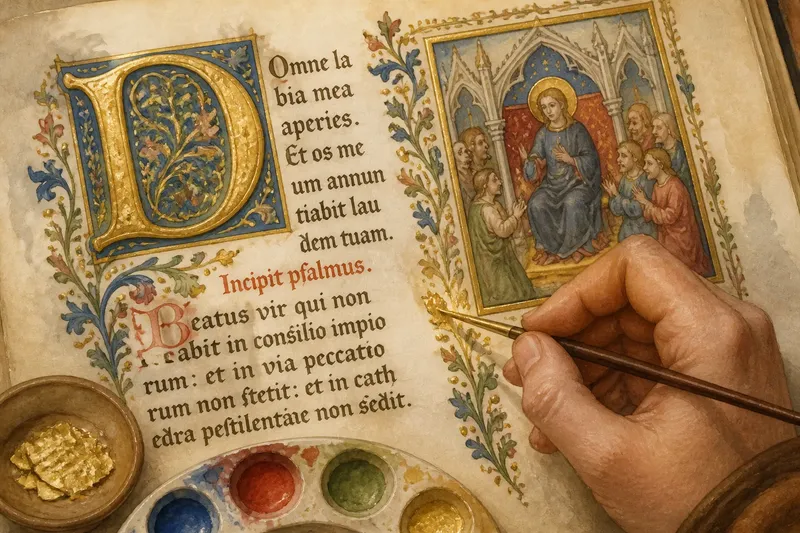
Meaning depends on the object’s setting and use. Gold on a ceremonial cup can mark an occasion as distinct from everyday meals. A gold-colored detail on a child’s drawing might make a sun, star, or imagined treasure feel special. In a portrait, a gold background may shift attention away from realistic space and toward a person’s status or symbolic importance.
Look at the neighboring materials, too. Gold beside plain wood can make the contrast feel deliberate; gold beside glass and polished stone may contribute to an overall display of luxury. Neither arrangement settles the meaning by itself. The surrounding choices help explain whether the gold seems intimate, formal, playful, sacred, or imposing.
Audience matters as much as setting. A family heirloom may carry memories for its owners that a stranger cannot see. A public emblem, by contrast, is designed to communicate to people who do not share the maker’s private history. The same material can therefore work as personal remembrance in one situation and public authority in another.
How can you read gold without reducing it to greed?
Use a short routine when you encounter a gold object in a gallery, at home, or in an image. Take a first impression, then make yourself look again for evidence that supports or complicates it.
- Notice the object’s purpose. Is it worn, displayed, used in a ceremony, given as a gift, or made to serve an ordinary task? Purpose can clarify whether gold is being used for recognition, decoration, memory, or display.
- Identify who controls it. Is the gold attached to a ruler, a religious figure, a household, a community, or an unknown owner? Control can make it read as privilege, shared identity, or personal attachment.
- Look at its scale and placement. A small accent may quietly guide the eye, while a gold surface that fills the view can feel commanding. Ask what the arrangement emphasizes rather than assuming that more gold always means more greed.
- Consider the surrounding action. Is the object being offered, worn, guarded, inherited, or left untouched? The action can change gold from a possession into a sign of generosity, duty, or separation.
- Keep two readings in view. Write down the interpretation that first comes to mind, then name another that fits the visible details. Holding both can reveal a tension the object depends on.
Say you see an invented scene in which a gold-colored medal rests on a school desk beside a handwritten note from a grandparent. You might first read the medal as a prize that elevates its owner; then notice the note and consider it a token of family encouragement. The observable details support both readings, while the scene gives more weight to recognition shared between people than to wealth alone.
Try the routine in order: purpose, control, placement, action, then competing readings. It slows down the first, most familiar interpretation without pretending that every object has one hidden answer.
What questions help you read gold?
Does gold always symbolize wealth?
No. Gold can signal wealth, but it can also mark honor, memory, celebration, spiritual importance, or deliberate artifice. The object’s use and setting help distinguish among those possibilities.
Does the Midas myth make every gold object a warning?
No. The myth offers a powerful warning about desire and its consequences, but an object may use gold for other purposes or invite mixed feelings. Treat the story as a comparison to test, not a rule to apply automatically.
How can I tell whether gold suggests status or affection?
Look at who gives, wears, keeps, or displays the object, and at the relationships shown around it. A public display may emphasize rank, while a privately exchanged object may carry affection, though either can hold both meanings.
Can a gold object have more than one symbolic meaning?
Yes. An object can honor someone while also displaying the resources of its maker, or suggest devotion while drawing attention to its own beauty. Multiple readings are useful when each can be connected to something visible in the object or its context.
When should you leave a reading open?
Some objects do not provide enough information to settle their meaning. A decorative bowl without a clear history may show care in its making, but not tell you whether its owner valued it as a family keepsake, a display piece, or simply a useful vessel. Acknowledging that uncertainty is more accurate than assigning a moral lesson on sight.
It also helps to separate what you can see from what you infer. “The gold is concentrated around the figure’s head” describes placement; “the figure is greedy” assigns a character trait. The second claim may become plausible if other details support it, but the gold alone cannot establish it.
Gold is not a universal symbol with one fixed message. The Midas touch remains a sharp way to think about desire, especially when abundance seems to threaten what matters more. But reading gold well means returning to the particular object: its purpose, its audience, its relationships, and the feelings its arrangement invites. When you ask those questions, gold can be a warning without being only a warning.